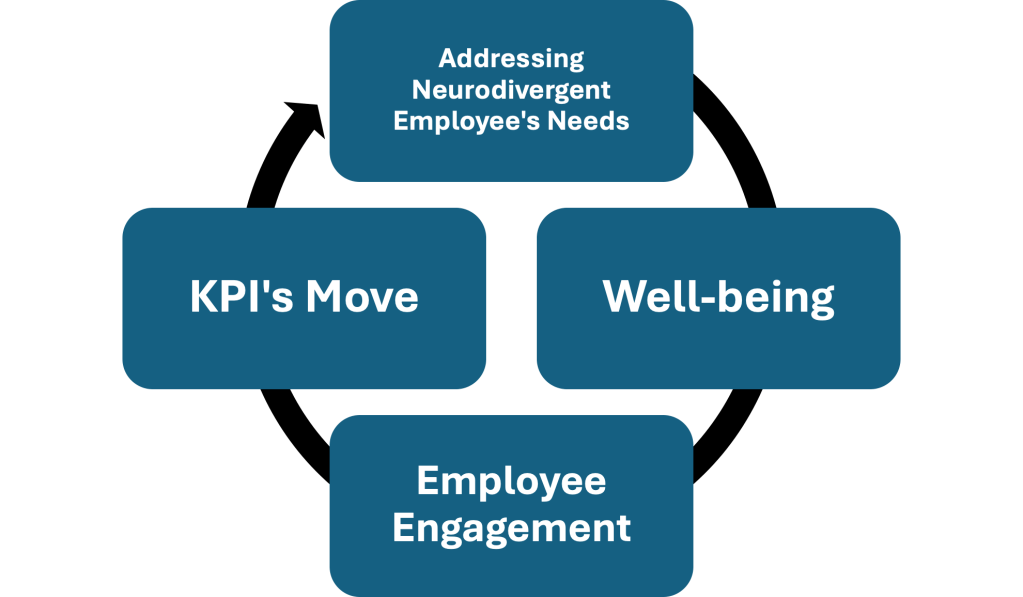
Your Current Employees are Neurodivergent
- 15-20% of the current workforce is neurodivergent
- 17% of neurodivergent employees are in senior leadership roles
- The vast majority do not disclose their diagnosis or are unsure if they ever will
Bottom Line – a significant portion of your company is neurodivergent and in leadership positions
Changes in Medicine and Culture will Amplify this Topic
- A reduction in stigma among younger generations may bring more awareness
- Improved criteria and tools are helping individuals better understand who they are
Bottom Line – there may be more employees talking about this going forward, or more employees with diagnoses that require support
Business Needs and Risk
- Businesses are always searching for ways to improve employee engagement and productivity
- Neurodivergent employees may be more susceptible to negative environments
- Neurodivergent employees have strengths and capabilities that can be tapped for higher productivity
- Managers cannot ask about personal diagnoses, and employees are typically not willing to disclose them
Bottom Line – there is a natural overlap between supporting your neurodivergent employees and your entire workforce that reduces risk and overcomes existing hurdles, without having to develop different approaches.
As a group, they (neurodiverse employees) have described work experiences that are needlessly stressful and disengaging, often due to circumstances that can be modified or corrected without a great deal of cost or effort.
What’s the Solution?
This topic is materially addressed by using a common language and framework that avoids risk and promotes creating an optimal work environment that allows employees to be at their best based on who they are an individuals and inside of a team.
We also want to uncover the circumstances that undermine engagement and productivity for your whole team, without putting unnecessary focus on neurodivergent employees.
Put the focus on talent!
It may be useful to think of Neurodiverse employees as exemplars around whom workplace conditions should be designed. They share the same set of workplace challenges as their Neurotypical peers, but their greater sensitivity to and understanding of some of those challenges means that what works better for them will often create an improved experience for all employees.
* Gallup – Neurodiverse Workers: Hidden Challenges, Untapped Potential
* NMS Health – Workers are Apprehensive About Disclosing Neurotypes
 Spectrum of Success